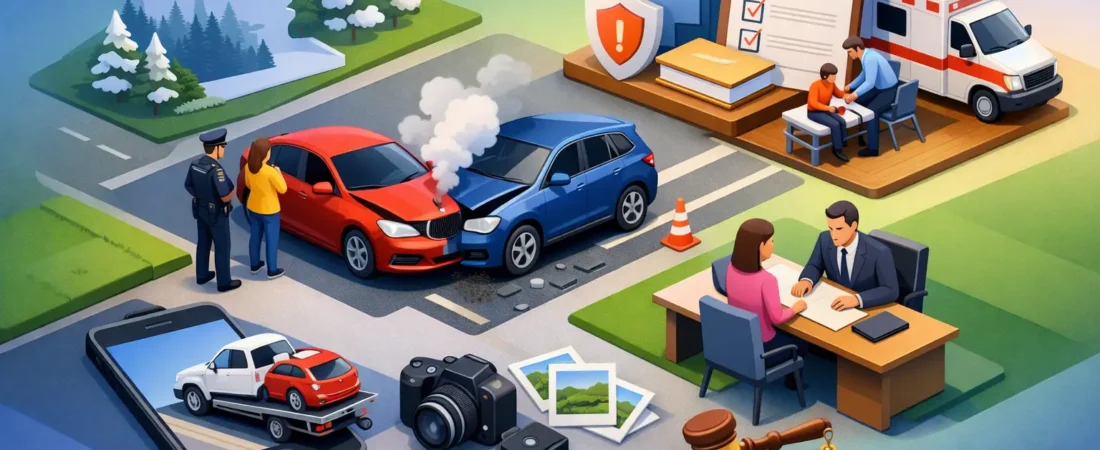
A crash can turn an ordinary drive home into a medical, financial, and insurance problem in seconds. The best steps after a car accident are not just about protecting a future claim. They are about protecting your health, preserving the facts, and keeping an insurance company from controlling the story before you know the full extent of your injuries.
Minnesota’s no-fault insurance system provides important benefits, but it can also create confusion. You may have Personal Injury Protection, or PIP, benefits available even if another driver caused the crash. That does not mean every bill will be paid automatically or that the at-fault driver’s insurer will make a fair offer. Early decisions matter.
Best Steps After a Car Accident: Start at the Scene
If you can do so safely, move out of traffic and call 911. Request police and medical help when anyone may be hurt, when vehicles cannot be driven safely, or when the crash involves a pedestrian, cyclist, motorcycle, commercial vehicle, or suspected impaired driver. Minnesota law requires a crash report in many injury and significant property-damage situations. A police report can become an important piece of evidence, but it should not be your only record of what happened.
Exchange contact, insurance, and vehicle information with the other driver. Keep the conversation brief. Do not apologize, speculate about fault, or argue about what someone else did. A simple statement such as, “I need medical attention and I will cooperate with police,” is enough.
Use your phone to document the scene if your condition allows. Photographs and video often capture details that disappear quickly after vehicles are towed and the road is cleared. Try to record:
- Vehicle damage from several angles, including license plates
- The position of vehicles, traffic signals, lane markings, debris, and weather conditions
- Visible injuries, damaged personal property, and deployed airbags
- Names and contact information for witnesses who saw the collision
If the other driver leaves the scene, do not follow them. Give police the vehicle description, plate number, direction of travel, and any photos you were able to take.
Get Medical Care Before Pain Gets Worse
Adrenaline can hide pain after a collision. Many people feel “fine” at the scene, then wake up the next day with neck pain, headaches, back pain, dizziness, numbness, or trouble sleeping. Delaying care can put your health at risk and gives insurers room to argue that your injuries came from something other than the crash.
Accept emergency evaluation when it is recommended. If you are not taken from the scene by ambulance, see a medical provider as soon as possible. Tell the provider you were in a motor vehicle collision and explain every symptom, even symptoms that seem minor. Follow treatment recommendations, attend appointments, and keep copies of discharge instructions, prescriptions, work restrictions, and medical bills.
This does not mean you should seek treatment you do not need. It means you should take real symptoms seriously. The right level of care depends on the injury. Severe pain, loss of consciousness, chest pain, weakness, confusion, or breathing trouble calls for immediate emergency care.
Notify Your Insurer and Open a PIP Claim
Minnesota is a no-fault state for many injury-related losses. Your own auto policy’s PIP coverage generally pays qualifying medical expenses and certain wage-loss benefits, regardless of who caused the crash. Basic Minnesota PIP coverage is commonly divided between medical benefits and economic-loss benefits, with total minimum coverage of $40,000.
Notify your insurance company promptly and ask how to open a PIP claim. Provide the basic facts: the date, location, vehicles involved, and police report number if you have it. You can report a crash without giving a recorded statement or guessing about injuries that are still developing.
Be careful with broad medical authorizations. Insurers may request access to years of unrelated records, then use preexisting conditions to minimize a legitimate injury. Your insurer may need records tied to the accident and treatment, but you do not have to sign away unlimited access to your private history without understanding the request.
If you miss work, ask your employer for written confirmation of missed time, job duties, and lost income. Keep receipts for transportation to appointments, prescription costs, and other crash-related expenses. PIP benefits can be valuable, but payment disputes and denials happen. Documentation gives you a stronger position.
Do Not Let the Other Driver’s Insurer Rush You
The other driver’s insurance adjuster may call quickly, sometimes before you have seen a doctor or understand how badly you are hurt. The adjuster may sound helpful, but their job is to protect the insurer’s bottom line. They may ask for a recorded statement, request broad records, or offer a quick settlement.
You are not required to accept an early offer. Once you settle and sign a release, you typically cannot return for more compensation if your condition worsens. That is a serious risk with concussions, whiplash, disc injuries, soft-tissue damage, and injuries that require ongoing therapy.
You can provide basic contact information and direct the adjuster to your attorney. Avoid posting crash details, injury updates, or activity photos on social media while your claim is pending. Even an innocent photo can be taken out of context and used to question your limitations.
Preserve Evidence While It Still Exists
Some of the strongest evidence is temporary. Nearby business cameras may overwrite footage within days. Vehicles may be repaired or declared a total loss. Witness memories fade. For serious crashes, evidence may also include event data recorder information, 911 calls, road-design records, cell phone evidence, or trucking company documents.
Save every document you receive and create a simple crash file. Include the police report, insurance letters, claim numbers, medical records, photos, repair estimates, and notes about conversations with adjusters. Write down how your injuries affect daily life: sleep, driving, childcare, household tasks, work, and hobbies. Pain and limitations are easier to explain when they are recorded consistently rather than reconstructed months later.
Understand When a Claim Against the At-Fault Driver May Be Available
PIP is not the whole picture. In Minnesota, an injured person may be able to pursue a liability claim against the at-fault driver when the injury meets a legal threshold, such as significant medical expenses, disability, permanent injury, permanent disfigurement, or death. The details matter, and insurers frequently dispute whether a threshold has been met.
A liability claim can seek damages that PIP may not fully cover, including pain and suffering, future medical needs, additional lost income, and other losses caused by the crash. Fault can also be contested. A driver who was speeding, distracted, impaired, following too closely, or ignoring traffic signals may be responsible, but evidence must support the claim.
The situation can be more complicated when an uninsured driver, rideshare vehicle, company vehicle, motorcycle, pedestrian, or multiple vehicles are involved. There may be more than one applicable insurance policy. Do not assume the first insurer that calls is the only source of coverage.
Speak With a Minnesota Car Accident Lawyer Early
You do not need to handle insurer pressure while you are trying to heal. A Minnesota car accident lawyer can review the crash, identify available coverage, manage insurance communications, preserve evidence, and calculate the full impact of the injury before settlement discussions begin.
At Best Injury Lawyer Minnesota, injured people can request a free case review and speak directly with an attorney about what happened. There is no upfront fee, and the firm is paid only when it recovers compensation. That gives you room to ask questions without adding another bill to your household.
The days after a crash can feel chaotic, especially when pain, missed work, and calls from insurance companies arrive all at once. Get the care you need, keep the evidence you can, and ask for help before a rushed decision becomes a permanent one. You do not have to face the insurance companies and paperwork alone.