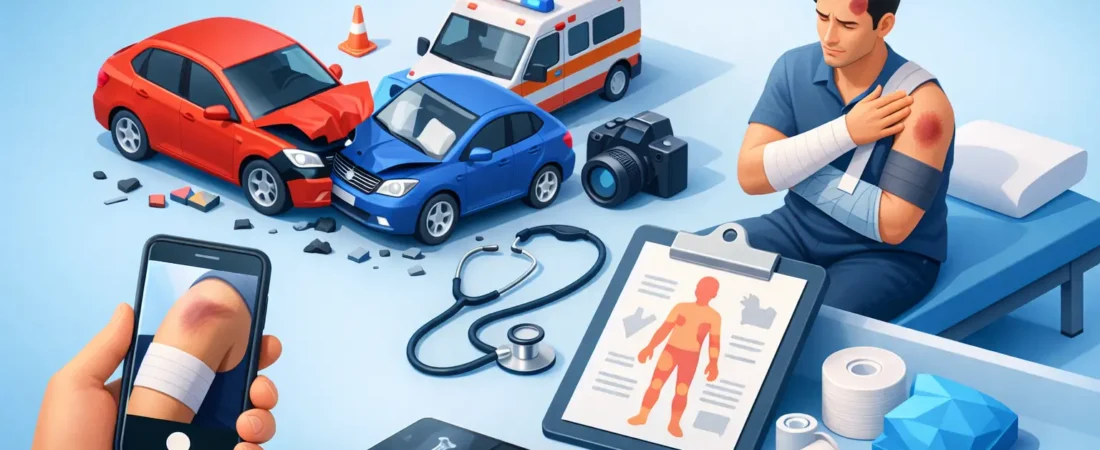
The crash may have lasted seconds, but the effects can unfold for days or weeks. Pain can worsen after the adrenaline wears off. A headache may become a concussion diagnosis. Back stiffness may make it impossible to work. Documenting injuries after a collision gives your medical providers a clearer picture of what you are experiencing and helps protect a Minnesota insurance claim from being dismissed or undervalued.
You do not need to build a legal case from a hospital bed. Your first job is to get appropriate medical care. Still, a few practical records created early can make a major difference later, especially when an insurer questions whether an injury is related to the crash or how seriously it has affected your life.
Get Medical Care and Create a Clear Starting Point
Seek emergency care right away for severe pain, trouble breathing, loss of consciousness, numbness, weakness, confusion, heavy bleeding, or any symptom that feels alarming. Call 911 when needed. Do not try to “push through” a potentially serious injury at the scene.
Even if you are able to leave the scene, consider an urgent care visit, emergency room evaluation, or prompt appointment with your primary care provider. Some collision injuries are not obvious immediately. Whiplash, soft tissue injuries, concussions, and certain spinal injuries can develop gradually.
Tell the provider that you were involved in a collision and explain every symptom, even if it seems minor. Be specific about where you hurt, when the symptoms began, whether they are getting worse, and what activities aggravate them. If your shoulder hurts when you reach overhead or your headache worsens in bright light, say so. Medical records often become the clearest evidence connecting your injury to the crash.
Follow the treatment plan your provider gives you. That may include medication, physical therapy, imaging, specialist visits, work restrictions, or follow-up appointments. Missing treatment does not automatically end a claim, but insurers may argue that a gap in care means you were not hurt as badly as you say. If you cannot attend an appointment because of cost, transportation, scheduling, or another real barrier, document the reason and tell your provider.
Documenting Injuries After a Collision: What to Save
Start one folder for collision-related information. A paper folder works, but a phone folder or cloud drive can be easier when you need to send records to an attorney or insurer. Save documents as you receive them rather than trying to recreate the timeline months later.
Photographs are useful, but take them safely. If you are still at the crash scene and can do so without putting yourself in danger, photograph visible injuries, vehicle damage, debris, road conditions, traffic controls, and the overall location. If you need medical help, leave the photos to a passenger, witness, or responding officer.
Continue taking dated photographs as bruising, swelling, cuts, burns, or surgical scars change. A bruise that appears faint on the first day can become much more visible two days later. Take photos in good lighting and from both close and wider angles. Avoid filters or edits. The goal is an honest record, not a dramatic one.
Keep these materials together:
- The police crash report number and any exchange-of-information sheet
- Photos and videos of the vehicles, scene, visible injuries, and damaged personal property
- Emergency room, clinic, therapy, pharmacy, imaging, and specialist records and bills
- Health insurance explanations of benefits and receipts for out-of-pocket expenses
- Written work restrictions, missed-work records, pay stubs, and employer communications
- Insurance letters, claim numbers, emails, and notes from calls with adjusters
Do not worry if you do not have every item immediately. Medical providers, employers, and insurers often issue records over time. What matters is creating an organized trail and not throwing away paperwork because it seems routine.
Keep a Simple Injury Journal
Medical records show diagnoses and appointments. An injury journal shows what the injury has actually cost you in daily life. This can be a note on your phone, a calendar, or a notebook. It does not need to be polished or lengthy.
Write down your symptoms, pain level, medications, sleep problems, appointments, and activities you could not do. Include practical details: needing help carrying groceries, missing your child’s game because of a headache, being unable to sit through a work shift, or waking up repeatedly because your neck hurts. Record bad days as well as improvements.
Be accurate. Do not exaggerate, and do not minimize your symptoms out of habit. A credible journal reflects a real recovery, which often has good days and setbacks. It can also help you remember details when speaking with a doctor or reviewing your claim later.
Protect Your Minnesota No-Fault Benefits
Minnesota is a no-fault state for auto insurance. In many cases, your own Personal Injury Protection, or PIP, coverage pays certain medical expenses and wage-loss benefits regardless of who caused the collision. That coverage can be a critical resource while you are treating.
PIP claims require documentation. Send requested medical bills, proof of missed work, and provider restrictions promptly, but keep copies of everything. If you are missing work, ask your employer for written confirmation of the dates missed, your rate of pay, and any reduced hours or duties. If you are self-employed, preserve invoices, canceled jobs, calendar entries, tax records, and communications showing lost business.
No-fault benefits are not always straightforward. An insurer may request an independent medical examination, question whether treatment is reasonable, or delay wage-loss payments while seeking more records. You have the right to ask questions and get legal guidance before signing broad authorizations or making decisions that could affect your benefits.
Be Careful With Insurance Conversations
Report the collision as required by your policy, but keep your description factual. Provide the date, location, vehicles involved, and basic information about the event. It is reasonable to say that you are seeking medical evaluation or still learning the full extent of your injuries.
The other driver’s insurer may call quickly and sound helpful. Their goal, however, is to resolve the claim for as little as possible. You are not required to give a recorded statement to the other insurer, speculate about fault, or accept a quick settlement while you are still treating.
Be cautious with social media, too. A photo from a family event or a short walk outside can be taken out of context by an insurance company. You do not have to disappear from your life, but avoid posting about the collision, your symptoms, treatment, or claim. Privacy settings are not a guarantee that a post will stay private.
When Documentation Becomes a Legal Issue
Not every collision claim requires a lawyer. A minor crash with short-term soreness, clear coverage, and promptly paid PIP benefits may resolve without a dispute. But legal help becomes especially valuable when injuries are serious, symptoms persist, work is affected, fault is disputed, a pedestrian or motorcyclist was hurt, or an insurer starts pressuring you for a statement or settlement.
A Minnesota personal injury lawyer can gather records, preserve evidence, calculate wage loss, communicate with insurers, and evaluate whether you may have a claim beyond no-fault benefits. That matters because the value of a case is not limited to the first medical bill. Ongoing treatment, permanent limitations, lost earning capacity, and the impact on your daily life may all need careful evaluation.
Best Injury Lawyer Minnesota handles the insurance companies and paperwork so injured people can focus on healing. There is no upfront fee for a case review, and getting answers early can prevent avoidable mistakes.
Keep the next step simple: get care, save what you receive, and write down what the injury is changing in your life. If the claim starts to feel like another burden on top of recovery, you do not have to face it alone.