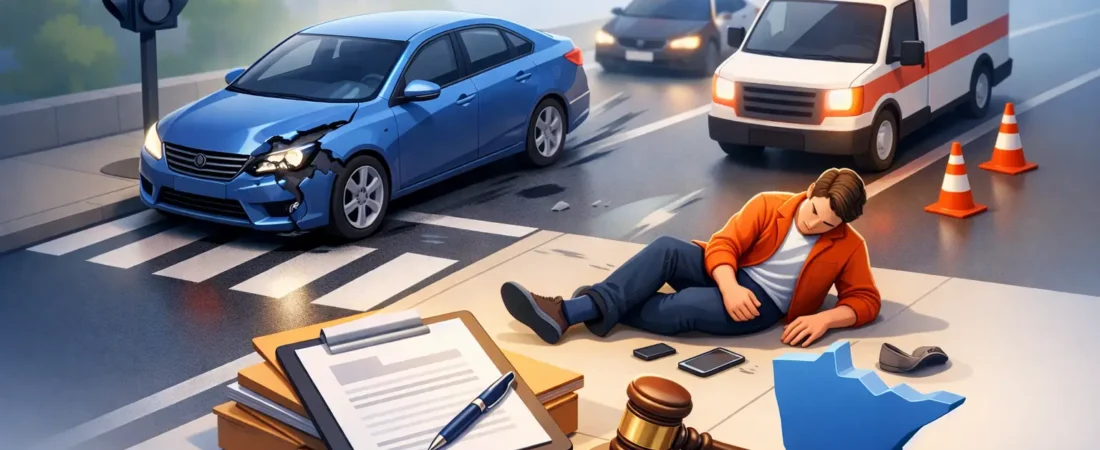
One moment you are dealing with the shock of a crash, and the next the other driver is gone. If you are facing a hit and run injury claim in Minnesota, the biggest mistake is assuming you have no case because the at-fault driver disappeared. In many situations, you can still recover compensation through your own insurance, and you may have other legal options depending on how the crash happened and what evidence can be found.
That first stretch after a hit-and-run is usually chaos. You may be hurt, your vehicle may be damaged, and the insurance company may already be asking for statements. This is where Minnesota law matters. Our state uses a no-fault system, which means your own policy may provide immediate benefits for medical bills and lost wages through Personal Injury Protection, or PIP, even if the other driver is never identified.
How a hit and run injury claim works in Minnesota
Minnesota no-fault coverage is often the starting point. After a crash, your PIP benefits can help cover medical expenses, wage loss, and certain replacement services regardless of who caused the accident. That matters in hit-and-run cases because there may not be an available liability insurer on the other side right away.
But no-fault benefits are usually not the whole claim. Serious injuries can go beyond PIP limits quickly. If the hit-and-run driver is later identified, you may be able to pursue a liability claim against that driver. If the driver is never found, uninsured motorist coverage may become a major part of the case. Many people do not realize that a hit-and-run vehicle is often treated as an uninsured vehicle for coverage purposes.
That is where these claims become more complicated than they look. The insurer may question whether there was actual contact, whether the crash happened as reported, or whether your injuries are tied to the collision. In other words, your own insurance company may not treat the claim like a simple payment request. It may investigate it like a disputed case.
Why insurers push back on hit and run injury claims
Insurance companies tend to scrutinize hit-and-run cases closely because there is no opposing driver available to admit fault. If there were no witnesses, no plate number, and limited scene evidence, the insurer may try to argue that key parts of the story cannot be verified.
That does not mean the claim is weak. It means documentation matters more. Photos from the scene, surveillance footage, damage patterns, 911 records, police reports, vehicle debris, and prompt medical treatment can all help support your account. Consistency matters too. If your report to police, your medical history, and your insurance statement all line up, your claim is stronger.
This is also why delays can hurt. Waiting days to report the crash or get medical care gives the insurer room to argue that the injuries were minor or unrelated. After a hit-and-run, fast action protects both your health and your case.
What to do right after a hit-and-run crash
If you are physically able, call 911 and report what happened immediately. Try to remember anything you can about the fleeing vehicle, including color, make, model, part of the plate, direction of travel, or any damage you noticed. Small details can become important later.
Take photos of your injuries, your vehicle, the roadway, skid marks, debris, and nearby businesses or homes that may have cameras. If anyone saw the crash, get names and contact information before they leave. Then seek medical care as soon as possible, even if adrenaline makes the pain feel manageable at first.
You should also notify your insurer, but be careful about recorded statements early on. People often speak before they understand the full extent of their injuries. A lawyer can step in quickly, protect your claim, and handle those conversations so you do not get boxed into a version of events that leaves out important facts.
Evidence can make or break the case
In a standard car crash, fault may be easier to sort out because both drivers are present. In a hit-and-run, proving what happened often depends on building the case from pieces. That can include body shop findings, black box data, traffic camera footage, witness statements, cell phone records, and medical documentation that matches the mechanics of the crash.
Sometimes the strongest evidence is found outside the accident report. A nearby gas station camera, a delivery vehicle dashcam, or a witness who saw the fleeing driver turn onto a side street may be the key to identifying the vehicle. Even when the driver is never found, that evidence can still support an uninsured motorist claim by showing the crash occurred as you reported it.
This is one reason people often benefit from legal help early instead of waiting for a denial. By the time an insurer disputes the case, video may be deleted and witnesses may be harder to locate. A prompt investigation gives you a better chance to preserve what matters.
When injuries are serious, the claim changes
A minor injury claim may stay mostly within the no-fault system. A serious one usually will not. If you suffered broken bones, a head injury, back injuries, surgery, lasting pain, or significant time away from work, your losses may far exceed PIP benefits.
At that point, the value of the case depends on more than just medical bills. Lost earnings, future treatment, pain and suffering, disability, and the impact on daily life can all become part of the larger claim. If the hit-and-run driver is found, those damages may be pursued directly. If not, uninsured motorist coverage may be the path forward.
It depends on the policy language, the facts of the crash, and whether Minnesota’s legal threshold for stepping outside no-fault has been met. This is where people can lose money by assuming the insurer will automatically calculate everything fairly. It usually does not work that way.
Common problems in a Minnesota hit and run injury claim
One common issue is underreporting injuries early. People say they are sore, then later learn they have a concussion, herniated disc, or shoulder tear. Another is giving the insurer a statement before they understand what uninsured motorist coverage may require.
There can also be disputes over phantom vehicle cases, where a driver forces you off the road without contact. Those claims may be more heavily contested because the insurer may argue there is not enough proof another vehicle caused the crash. The facts matter a lot in those situations.
Deadlines matter too. Insurance notice requirements and legal filing deadlines are not always the same thing. Missing one can damage the claim even if the injuries are real and serious. That is why it helps to get clear advice early rather than trying to sort out every coverage issue while recovering.
How a lawyer helps with a hit and run injury claim
A lawyer does more than file paperwork. In a hit-and-run case, legal representation can mean locating evidence before it disappears, coordinating with law enforcement, reviewing every available insurance policy, and pushing back when the insurer downplays injuries or questions liability.
Just as important, your lawyer can take over the pressure. You do not have to spend your recovery arguing with adjusters, gathering records, or trying to decode Minnesota no-fault rules on your own. We handle the insurance companies and the paperwork so you can focus on healing.
For many injured people, the biggest relief is having someone look at the full picture. Not just the emergency room bill, but the wage loss claim, the follow-up treatment, the uninsured motorist issues, and the long-term effect of the injury. That is how cases are evaluated properly.
At Best Injury Lawyer Minnesota, that means direct attorney attention, a free case review, and no fee unless we win. More importantly, it means having someone in your corner from the start when the facts are still being gathered and the insurance company is already protecting its side.
Do not assume leaving the scene ends your case
A driver who flees the scene creates fear and uncertainty, but that does not erase your rights. Minnesota law and your own coverage may still provide a path to compensation, especially if you act quickly, document everything, and get the right help involved early.
If you are dealing with medical bills, missed work, and calls from insurance after a hit-and-run, you do not have to face it alone. The right next step is often much simpler than people think: protect your health, protect the evidence, and let someone experienced take the claim from there.