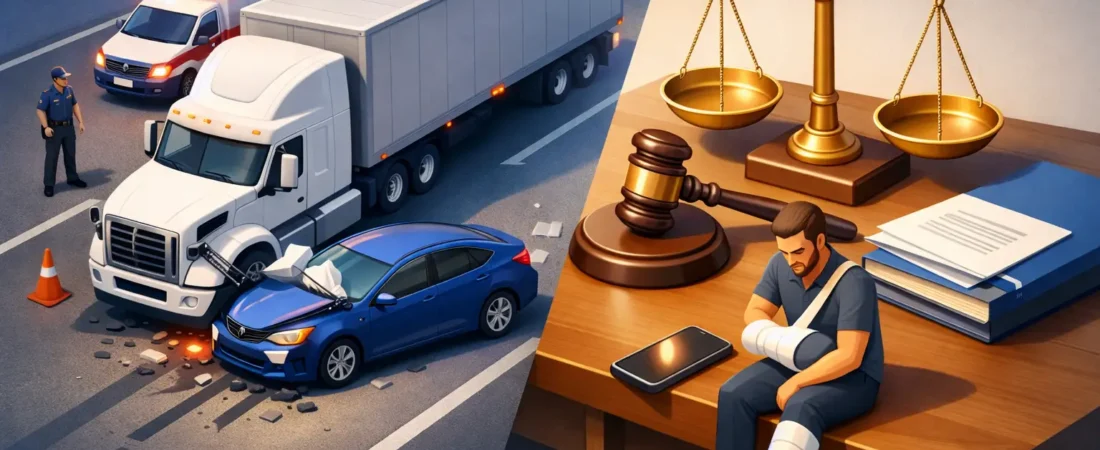
A semi-truck can turn a routine Minnesota drive into a life-changing injury in seconds. If you are facing medical care, missed work, and calls from insurance adjusters after a collision, a truck crash injury lawyer can step in before critical evidence disappears and the insurance company shapes the story around its interests.
Truck accident claims are rarely handled like ordinary car crash claims. The injuries are often more serious, the insurance policies are larger, and several companies may be involved. You do not have to sort through that while you are trying to heal. We handle the insurance companies and the paperwork so you can focus on recovery.
Why truck crash claims need fast attention
Commercial trucks carry enormous weight and need more time and distance to stop. When a driver is speeding, fatigued, distracted, improperly trained, or operating a poorly maintained truck, the results can be devastating for people in passenger vehicles, on motorcycles, or on foot.
The trucking company may have records that help explain what happened, including driver logs, vehicle inspection reports, maintenance records, dispatch communications, and data from the truck’s electronic systems. Some of that information may not be kept forever. A lawyer can act quickly to request preservation of evidence and begin an independent investigation.
Timing matters for another reason: insurers often contact injured people early. An adjuster may sound helpful while asking questions designed to limit the value of your claim. A recorded statement, a quick settlement offer, or a broad medical authorization can create problems before you know the full extent of your injuries.
What a truck crash injury lawyer investigates
A truck wreck may involve more than one responsible party. The driver may have made a dangerous decision, but the driver is not always the only person or business accountable. Depending on the facts, a claim may involve the trucking company, a freight broker, a maintenance provider, a cargo-loading company, or the maker of a defective truck part.
A strong case starts with the details. We review the police report, photographs, witness accounts, medical records, and available video footage. We also look closely at whether the truck driver followed hours-of-service rules, whether the truck was inspected and repaired as required, and whether the load was secured correctly.
Some crashes come down to obvious conduct, such as a truck drifting across lanes or running a red light. Others require a deeper review. A rear-end collision, jackknife crash, underride accident, or wide-turn collision can raise questions about braking, visibility, road conditions, cargo weight, training, and company safety practices. The answer depends on the evidence, not assumptions made at the scene.
Minnesota no-fault benefits after a truck accident
Minnesota’s no-fault system can be confusing after a serious crash. In many cases, your own auto policy provides Personal Injury Protection, commonly called PIP, regardless of who caused the collision. PIP may help pay medical expenses, a portion of lost wages, replacement services, and certain other benefits up to the limits of your policy.
PIP is valuable, but it is often not enough after a truck crash. Emergency treatment, surgery, physical therapy, time away from work, and lasting limitations can quickly exceed available benefits. You may also have a claim against the at-fault driver or company for losses that PIP does not fully cover, including pain and suffering and unpaid economic losses.
Minnesota law places certain thresholds on claims for non-economic damages in many motor vehicle cases. Serious injuries may meet those requirements, but insurers may still dispute the severity of your condition or argue that it was caused by something other than the crash. That is why consistent medical care, clear documentation, and early legal guidance matter.
Do not let the insurer rush your decision
Commercial carriers and their insurers often begin protecting their position immediately. Their investigators may visit the crash site, inspect vehicles, and speak with their driver within hours. They have experience handling high-value claims. You deserve someone focused on protecting your side of the case.
A settlement offer can feel like relief when bills are arriving and you cannot work. But accepting it usually means giving up the right to seek more money later, even if your symptoms worsen or you learn you need additional treatment. Before signing anything, understand what the offer covers and what it leaves behind.
We evaluate the full impact of the crash, including current treatment, expected future care, lost income, reduced earning ability, out-of-pocket expenses, and the personal cost of living with pain or limitations. Not every claim requires a lawsuit, and a fair settlement can be the right outcome. But the case should be prepared as if it may need to be presented in court. That preparation gives you leverage when the insurer refuses to be reasonable.
What to do after a Minnesota truck collision
Your health comes first. Get emergency care or see a medical provider as soon as possible, even if you initially believe your injuries are minor. Adrenaline can mask pain, and conditions involving the head, neck, back, or internal injuries may become clearer over time.
If you can safely do so, save what you have. Keep photographs of the vehicles, roadway, visible injuries, and damaged personal property. Preserve the police report information, names of witnesses, medical bills, work records, and communications from insurers. Avoid posting details about the crash or your health on social media while your claim is pending.
You should also be careful with repair decisions and vehicle access. Your vehicle may contain evidence about the force and angle of impact. Before it is repaired, sold, or destroyed, speak with an attorney about whether it should be documented or inspected.
When injuries change your ability to work and live normally
The most difficult part of a truck crash is often what happens after the emergency room visit. You may be unable to lift your child, return to a physical job, drive without fear, or complete ordinary tasks at home. Those losses are real, even when they do not fit neatly into an insurance form.
A claim should account for the practical consequences of your injury. For someone who works construction, delivery, health care, or another active profession, a shoulder, back, or brain injury can affect income for years. For an older adult, a pedestrian, or a motorcyclist, recovery may require a different level of support. We listen to how the injury has changed your daily life, then build the claim around the evidence.
Direct help without upfront legal fees
After a crash, you should not have to choose between getting legal help and paying your household bills. Best Injury Lawyer Minnesota offers free case reviews and works on a contingency-fee basis. That means you do not pay attorney fees upfront, and you do not owe a fee unless we recover compensation for you.
You will have a direct path to an attorney who can explain what is happening, answer your questions, and take over the pressure from insurers. We can review the facts, identify available insurance coverage, gather evidence, and pursue the compensation your case supports.
A truck crash can leave you feeling as though powerful companies control every next step. They do not. Get medical care, protect the evidence you can, and ask for help before you make a decision that affects your future. You do not have to face the aftermath alone.