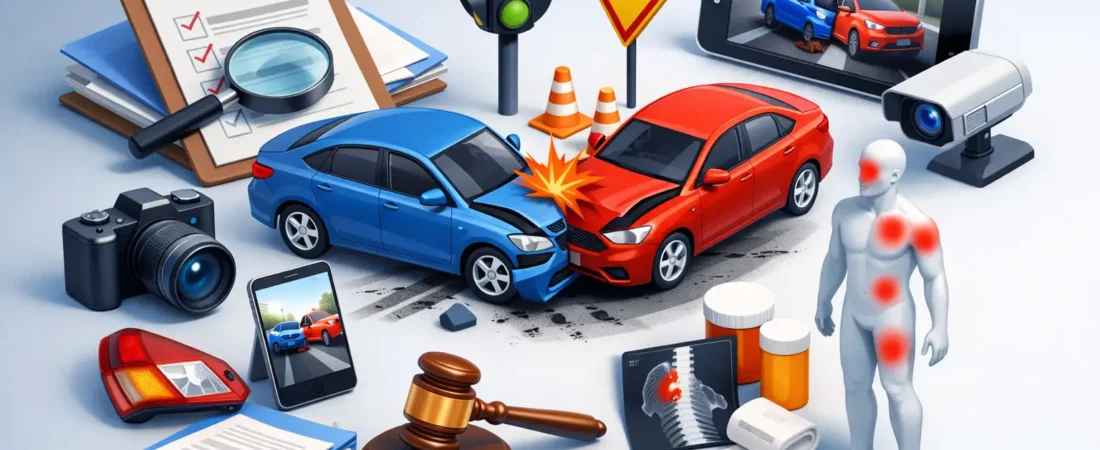
The days after a crash can blur together: pain, repair estimates, missed work, and insurance calls that seem to arrive too soon. Knowing what evidence helps a car accident injury claim gives you a practical way to protect yourself before important details disappear. The strongest claims are not built on one document. They are built on a clear, consistent record showing how the crash happened, what injuries it caused, and how those injuries changed your life.
In Minnesota, your own no-fault coverage, often called Personal Injury Protection or PIP, may pay certain medical and wage-loss benefits regardless of who caused the collision. But PIP does not make fault evidence irrelevant. If your injuries meet Minnesota’s legal threshold for a claim against the at-fault driver, evidence can make a major difference in the compensation available.
What Evidence Helps a Car Accident Injury Claim Most?
The evidence that matters most usually falls into three connected categories: proof of fault, proof of injury, and proof of financial loss. Insurers look for gaps between those categories. They may argue the other driver was not responsible, your condition was preexisting, your treatment was unnecessary, or your lost income cannot be verified.
Good evidence addresses those arguments before they gain traction. It creates a timeline that starts at the crash scene and continues through treatment, recovery, and the financial effects of the injury.
The crash report and scene evidence
A police crash report is often one of the first documents an insurer reviews. It may identify the drivers, witnesses, road conditions, vehicle damage, citations, and the responding officer’s initial observations. It is not the final word on fault, but it can provide an important starting point.
Photos and video can be just as valuable. If you can safely do so after a crash, photograph the vehicles from several angles, visible damage, skid marks, debris, traffic signals, lane markings, weather conditions, and your injuries. A wide photo shows the overall scene; close photos show the details. Save the original files rather than relying only on screenshots or social media posts.
If nearby businesses, homes, or intersections may have surveillance footage, time matters. Many systems automatically record over older footage within days or weeks. Dashcam footage from either vehicle can also be critical, especially in disputes involving a red light, unsafe lane change, tailgating, or a driver who claims they never saw you.
Witness statements that preserve the details
Independent witnesses can be especially persuasive because they have no financial stake in the outcome. A witness may have seen a driver texting, speeding, failing to yield, or turning into a crosswalk. Their account can help when both drivers tell conflicting versions of the story.
Get names and contact information when possible. Do not assume the police report contains every witness or every detail. A short statement taken while the event is fresh may be far more reliable than trying to locate someone months later.
Medical records that connect the crash to your injuries
Medical evidence is the center of an injury claim. Seek prompt medical attention after a collision, even if you think the pain may pass. Adrenaline can hide symptoms, and injuries such as concussions, whiplash, soft-tissue damage, and back injuries may become more noticeable over the next several days.
Your emergency room, urgent care, primary care, specialist, physical therapy, imaging, and prescription records can document the nature and progression of your injuries. These records should show when symptoms began, what providers found, what treatment was recommended, and whether you followed that plan.
Consistency matters. Tell each provider about all symptoms and explain that they began after the crash if that is true. Be accurate about prior injuries or medical conditions too. A prior condition does not automatically prevent recovery, but failing to disclose it gives an insurer room to question your credibility. The issue is often whether the collision caused a new injury or worsened an existing one.
A personal record of pain and daily limitations
Medical charts do not always capture what an injury costs you outside the exam room. A simple written recovery journal can help show the real impact of a crash. Note pain levels, sleep problems, headaches, mobility issues, appointments, medications, missed family activities, and tasks you need help completing.
Keep it factual. Instead of writing that you had a terrible day, record that you could not sit through a work meeting, needed help lifting groceries, or woke three times because of neck pain. These details can help explain why a diagnosis on paper affected your ability to work and live normally.
Evidence of Lost Wages and Other Financial Losses
An injury claim should account for more than the first medical bill. Save every document connected to expenses and income losses caused by the collision. This includes medical bills, insurance explanations of benefits, prescription receipts, mileage to appointments, invoices for household help, and records of damaged personal property.
For lost income, pay stubs, W-2 forms, tax returns, work schedules, and a statement from your employer can establish what work you missed and what you would have earned. If you are self-employed, business records, invoices, appointment cancellations, and prior-year tax documents may be needed to show the loss.
Future medical needs and reduced earning capacity may also matter in serious injury cases. Those losses generally require support from treating providers, medical specialists, vocational professionals, or other qualified experts. A claim should not guess at future costs, but it should not ignore documented long-term consequences either.
Minnesota No-Fault Benefits Require Their Own Documentation
Minnesota PIP coverage commonly provides benefits for medical expenses and certain wage loss, subject to policy limits and requirements. Your insurer may ask for medical authorizations, disability slips, wage verification, and receipts. Providing organized documentation can help prevent avoidable delays.
Still, do not assume your insurer’s first request or decision is final. Insurers may question whether treatment is reasonable, related to the crash, or medically necessary. They may also request a medical examination arranged by the insurance company. Before signing broad authorizations or giving a recorded statement, understand what information is being requested and why.
A Minnesota car accident claim against the at-fault driver may become available when injuries meet the state’s tort threshold, such as through significant medical expense, extended disability, permanent injury, permanent disfigurement, or death. The evidence needed depends on the facts of the case. A fracture case may be documented differently than a concussion, motorcycle injury, or pedestrian collision.
Avoid Gaps That Insurance Companies Use Against You
Insurance adjusters are trained to examine gaps in treatment, inconsistent statements, and online activity. That does not mean you must live in fear of making a mistake. It means you should be careful and honest.
Do not post about the crash, your injuries, or physical activities on social media while a claim is pending. A single photo can be taken out of context. Do not minimize your injuries in a recorded call simply because you are trying to be polite. And do not delay treatment without a reason if symptoms are continuing.
There are legitimate reasons for treatment gaps, including difficulty getting an appointment, lack of transportation, financial pressure, or a provider’s recommendation. Document those circumstances. The goal is not perfection. It is a truthful record that makes sense from the collision through your recovery.
Let a Lawyer Preserve the Evidence Early
Some of the most useful evidence is controlled by other people: a trucking company, a rideshare platform, a business with security cameras, another driver’s insurer, or a phone carrier. It can be lost, repaired, deleted, or overwritten if no one acts quickly.
A car accident attorney can investigate the collision, request records, identify insurance coverage, organize medical proof, and handle insurer communications. At Best Injury Lawyer Minnesota, we help injured people take that pressure off their shoulders while building claims prepared for negotiation or trial. You do not have to face the insurance companies and paperwork alone.
If you are hurting, start with the basics: get medical care, save what you receive, write down what you remember, and avoid rushing into a settlement before you know the full extent of your injuries. The evidence you preserve now can give you the room to focus on healing while someone protects your claim.