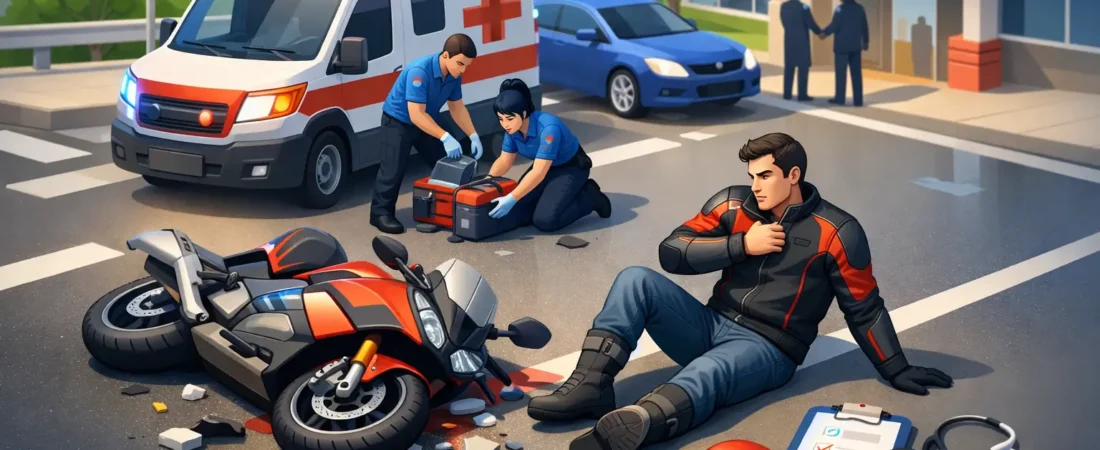
The first few minutes after a motorcycle crash can shape everything that comes next – your health, your insurance claim, and your ability to recover financially. If you are wondering what to do after motorcycle accident injury, the short answer is this: get medical help, protect the evidence, and do not let the insurance company control the story.
Motorcycle injuries are often more serious than injuries in a typical car crash. Even when a rider is wearing a helmet and protective gear, the body takes the hit. Road rash, fractures, head injuries, back injuries, and internal trauma can show up fast or worsen over the next several hours. That is why your first priority should always be your physical safety.
What to do after motorcycle accident injury at the scene
If you can move safely, get out of traffic and call 911. Ask for both police and medical assistance. Even if you think you can walk it off, do not assume you are fine. Adrenaline masks pain, and some serious injuries do not fully show themselves until later.
When officers arrive, give clear, factual information. Stick to what happened. Do not guess, speculate, or apologize. A simple statement about the direction you were traveling, where the impact occurred, and what you observed is enough. If the other driver starts shifting blame, resist the urge to argue on the roadside. That debate belongs in the claim process, not in a heated exchange after a crash.
If you are physically able, take photos of the motorcycle, the other vehicle, debris, skid marks, traffic signals, weather conditions, and your visible injuries. Get the driver’s name, insurance information, license plate number, and contact details. If anyone saw the crash, ask for their names and phone numbers. Witnesses can matter a great deal in motorcycle cases because riders are often unfairly blamed.
Get medical care right away
One of the biggest mistakes injured riders make is waiting too long to get checked out. If paramedics recommend transport, take it seriously. If you are not taken by ambulance, go to the emergency room, urgent care, or your doctor as soon as possible.
Medical records do more than protect your health. They also create a timeline tying the crash to your injuries. If you wait several days, the insurance company may argue that you were not badly hurt or that something else caused your condition. That is especially common with neck injuries, concussions, shoulder injuries, and soft tissue damage.
Follow through with treatment after the first visit. Attend follow-up appointments, physical therapy, specialist visits, and imaging appointments. Gaps in care can weaken your claim. It is not just about proving pain. It is about showing that the injury required real and ongoing treatment.
Report the crash, but be careful with insurance
You should report the accident to your insurer promptly. Give basic facts about the crash, the vehicles involved, and where it happened. Beyond that, be cautious. Insurance adjusters often sound helpful early on, but their job is to reduce payouts.
If the other driver’s insurer calls, you are not required to give a recorded statement right away. In many cases, you should not. A rider who is medicated, shaken up, or still learning the extent of their injuries can say something incomplete or inaccurate that gets used against them later.
This is where many injured people feel pressure. Bills start coming in. Time off work adds stress. The adjuster offers quick money, and it sounds tempting. But early settlements are usually built around one assumption: that your case is worth less than it really is. Once you accept, you generally cannot go back and ask for more.
Understand how Minnesota insurance rules affect motorcycle claims
Minnesota is a no-fault state for car accidents, but motorcycle cases do not work exactly the same way. This is where confusion starts for many riders. Standard no-fault personal injury protection, often called PIP, generally applies to motor vehicles, but motorcycles are treated differently under Minnesota law.
That means coverage questions can get complicated fast. Whether medical bills or wage loss are paid through your own policy, the at-fault driver’s policy, or another source may depend on the exact insurance involved and the facts of the crash. If an insurer gives you a quick answer that leaves you paying out of pocket, do not assume it is the final word.
A Minnesota motorcycle injury claim often turns on fault, available bodily injury coverage, underinsured motorist coverage, and the quality of the evidence gathered early. That is one reason these cases benefit from fast legal review. The right strategy is not always obvious from the first phone call with an adjuster.
Preserve evidence before it disappears
Motorcycle crash evidence tends to disappear quickly. Vehicles get repaired. Helmets get thrown away. Skid marks fade. Surveillance footage gets deleted. Witnesses forget details.
Keep your motorcycle in its post-crash condition if possible until it has been photographed and evaluated. Save your helmet, jacket, gloves, boots, and any damaged gear. Do not wash away blood, scrape marks, or impact damage. Those items can help show force, direction of impact, and the seriousness of the collision.
It also helps to keep a simple injury journal. Write down your pain levels, sleep issues, missed work, mobility problems, and daily limitations. If you cannot lift your child, sit through a work shift, or sleep through the night, that matters. A claim is not only about hospital bills. It is also about how the injury disrupted your life.
Watch what you say and post after the crash
Insurance companies look for ways to challenge injury claims, and that often includes social media. A photo of you standing at a family event or smiling at dinner can be twisted into evidence that you are not really hurt. That is unfair, but it happens.
Avoid posting about the accident, your injuries, your treatment, or fault. Ask friends and family not to tag you or comment publicly about your condition. The same caution applies to casual conversations with adjusters. Keep your statements brief and factual until you know the full picture.
When to talk to a motorcycle accident lawyer
If you suffered more than minor bruising, missed work, needed ongoing care, or are getting pushback from insurance, it is smart to speak with a lawyer early. Motorcycle cases carry unique bias. Too often, insurers assume the rider was reckless before the evidence is even reviewed.
A lawyer can step in before mistakes pile up. That includes handling insurance communications, securing records, preserving evidence, identifying all available coverage, and calculating the full value of your losses. It also gives you breathing room. You should not have to manage adjusters while dealing with pain, appointments, and financial stress.
At Best Injury Lawyer Minnesota, that early help often means preventing the insurance company from defining the claim on its own terms. Strong cases are built from the start, not patched together later.
What compensation may be available
It depends on the facts, but a motorcycle injury claim may include payment for medical expenses, future treatment, lost wages, reduced earning ability, pain and suffering, and damage to your bike and gear. In severe injury cases, compensation may also reflect permanent impairment, scarring, disability, and long-term care needs.
The hard part is that these damages are not always obvious in week one. A broken bone may heal slower than expected. A concussion may interfere with work for months. A shoulder injury may require surgery after conservative treatment fails. That is why quick settlement pressure is risky. The true cost of a motorcycle injury often becomes clearer over time.
A practical next step if you are injured now
If the crash just happened, focus on three things today: get medical care, save every piece of evidence you can, and be careful with insurance conversations. If treatment is ongoing or the insurer is already making the process harder, get legal guidance before you agree to anything.
You do not have to face it alone. After a motorcycle crash, the right help can protect both your recovery and your case while you focus on healing.