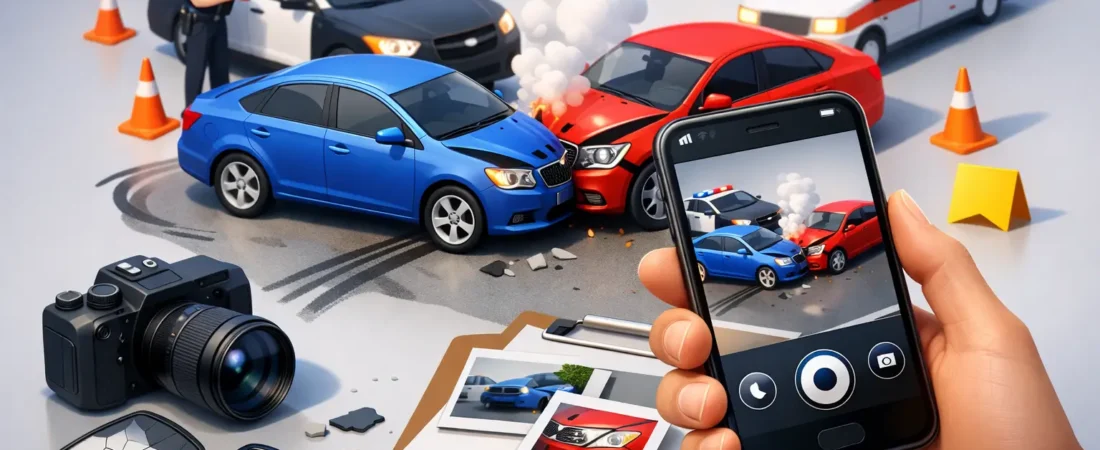
A crash can turn an ordinary Minnesota commute into confusion in seconds. While you are waiting for police, checking on passengers, and trying to understand what happened, accident scene photos may capture details that disappear before anyone has time to investigate: vehicle positions, debris, road conditions, traffic signals, and the damage that tells the real story.
You should never take photos instead of getting medical care or moving to a safe location. But if you can safely document the scene, those images can become powerful evidence when an insurance company questions how the collision happened or how serious the impact was.
Why Accident Scene Photos Matter
Insurance adjusters do not see the crash. They see reports, estimates, medical records, and photographs. The more clearly your photos connect the damage, roadway, and circumstances of the collision, the harder it is for an insurer to fill gaps with assumptions that hurt your claim.
Photos can be especially valuable when drivers disagree about who had the right of way, a vehicle is moved before officers arrive, weather conditions were a factor, or damage is repaired quickly. They may also preserve information that a police report does not fully capture, such as an obstructed stop sign, faded lane markings, a construction zone, or the exact location of debris.
Minnesota is a no-fault state, which means your Personal Injury Protection, or PIP, coverage generally pays certain medical expenses and wage loss benefits regardless of fault. Fault still matters, though. It can affect a liability claim against the at-fault driver and the compensation available for pain, disability, and other losses when the legal threshold is met. Clear evidence can make a meaningful difference.
First, Protect Your Safety
Do not stand in traffic to get a better angle. Do not walk into an intersection, approach an aggressive driver, or delay emergency care because you are trying to document the scene. If you are injured, dizzy, in pain, or emotionally shaken, ask an uninjured passenger, witness, police officer, or family member to help when it is safe.
If your vehicle can be moved safely, follow instructions from law enforcement. Take a few quick photos before moving it if conditions allow, but do not create another hazard. A photograph is helpful. Your health and safety come first.
What to Photograph After a Minnesota Crash
Start with wide photos that show the entire scene. Stand at a safe distance and capture the intersection, road layout, lanes, traffic direction, and where each vehicle came to rest. Take shots from more than one side of the roadway when possible. These broader images help explain the collision better than a close-up of a dent alone.
Then photograph each vehicle. Capture all sides, including the front, rear, driver side, passenger side, wheels, windshield, airbags, and interior if relevant. Do not limit your photos to the most obvious damage. A side-impact crash, for example, may leave damage on doors, tires, mirrors, and interior panels that helps show the force and direction of impact.
Close-up photos should document broken parts, deployed airbags, crushed metal, shattered glass, fluid leaks, paint transfer, debris, and skid marks. Take a wide shot first, then move closer. That sequence helps establish where the damage or debris was located.
Also photograph the conditions around the crash. Useful details include traffic lights, stop signs, yield signs, speed limit signs, lane markings, crosswalks, bike lanes, potholes, snow or ice, standing water, construction equipment, blocked sight lines, and poor lighting. For a pedestrian or motorcycle crash, the road surface and visibility conditions can be particularly important.
If you can do so safely and lawfully, photograph the other vehicle’s license plate, insurance information, and the driver’s license information they provide. You can also take photos of the responding officer’s name, badge number, and report information. Avoid posting those images online or sharing private information broadly.
Do Not Forget Your Injuries and Personal Property
Visible injuries can change quickly. Bruising may not appear until hours or days after a collision, and cuts, swelling, burns, or abrasions may look worse later. Take photos as soon as practical, then continue documenting changes during recovery. Use good lighting and include both close-up and wider photos to show the injured body part.
Photograph damaged personal items too. This may include a helmet, glasses, child safety seat, phone, clothing, bicycle, motorcycle gear, laptop, or items inside the vehicle. A cracked helmet or torn jacket may support the seriousness of an impact and may also be part of your property damage loss.
Photos do not replace medical records. Get evaluated promptly if you are hurt, even when symptoms seem manageable at first. Delays in treatment can give an insurer room to argue that your injuries were unrelated or less serious than you claim.
Preserve the Images Exactly as They Were Taken
Keep the original files on your phone. Do not crop, filter, draw on, or edit accident photos before saving an untouched copy. Original image data can show the date, time, and sometimes location where a photo was taken. Edited images can invite unnecessary questions from an insurance company.
Back up your photos to a secure cloud account, computer, or external drive. Create a simple folder with the crash date and keep videos, screenshots, repair estimates, towing records, and police report information together. If you use a dashboard camera, save the footage immediately. Many systems automatically record over older video.
Write down what each photo shows while the details are fresh. A brief note such as “northbound lane, immediately after impact” or “ice near crosswalk at 7:20 a.m.” can be helpful later. Keep your notes factual. You do not need to decide fault at the scene or argue with the other driver.
Be Careful With Social Media and Insurer Requests
It is natural to tell friends and family that you were in a crash. Still, avoid posting scene photos, injury photos, opinions about fault, or updates about your activities on social media. An insurer may take a single post out of context and use it to challenge your injuries or claim.
You also do not have to send an insurer every image from your phone immediately after a crash. The other driver’s insurance company has its own financial interest in minimizing what it pays. Before giving a recorded statement, signing a broad medical release, or turning over evidence you do not understand, consider speaking with a Minnesota personal injury lawyer.
A lawyer can review your photos alongside the police report, witness information, medical records, vehicle damage, and available video evidence. In some cases, nearby business footage, traffic camera footage, or a vehicle’s electronic data may need to be requested quickly before it is lost.
When Photos Are Missing or the Scene Is Already Gone
Not having accident scene photos does not mean you do not have a case. Many injured people are taken from the scene by ambulance, are too hurt to think about evidence, or simply do not realize how quickly a roadway will be cleared. That is understandable.
Other evidence may still help establish what happened. The police report, witness accounts, 911 records, vehicle inspection, repair records, medical documentation, dash camera footage, and photographs taken by others can all matter. A prompt investigation is often more valuable than trying to recreate the scene weeks later.
If you were injured in a Minnesota car, motorcycle, rideshare, or pedestrian accident, you do not have to face the insurance companies and paperwork alone. Best Injury Lawyer Minnesota can review what evidence exists, protect your claim, and help you focus on healing while your case is handled with the urgency it deserves.