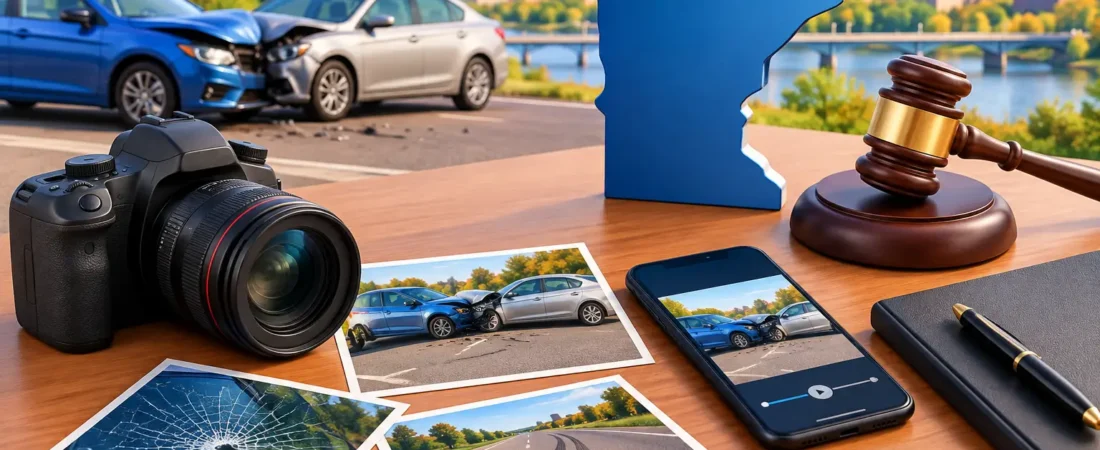
A crash can leave you shaken, hurting, and unsure what to do first. The best evidence for accident case claims is often gathered in the hours and days after a collision, before vehicles are repaired, witnesses forget details, or insurance companies shape the story in their favor.
You do not need to prove your case alone while managing appointments, pain, and missed work. But knowing what evidence matters can protect your claim from the beginning. In Minnesota, strong documentation can support both your no-fault benefits and, when your injuries meet the legal threshold, a claim against the driver who caused the crash.
What Makes Evidence Strong After a Minnesota Accident?
Strong evidence does two things: it shows how the accident happened and shows how the accident changed your life. A clear photo of a damaged vehicle may help establish impact. A detailed medical record can connect that impact to your injuries, treatment, restrictions, and time away from work.
Insurance companies rarely accept a claim simply because someone says they were hurt. Adjusters look for gaps, inconsistencies, pre-existing conditions, delayed treatment, and any reason to argue that you share fault. The goal is not to collect every possible document. It is to preserve reliable proof before it disappears and present it in a way that tells a clear, truthful story.
Minnesota follows a no-fault insurance system for many initial injury expenses. Your Personal Injury Protection, or PIP, coverage can help pay medical bills and wage-loss benefits regardless of who caused the crash. Fault still matters, however, when you are pursuing vehicle damage and when serious injuries allow a claim against the at-fault driver for damages beyond PIP benefits.
Best Evidence for an Accident Case: Start at the Scene
The accident scene is temporary. Traffic moves, skid marks fade, debris is cleared, and damaged vehicles may be towed away quickly. If you can safely do so, use your phone to document the area before anything changes.
Photos and video are especially useful when they show more than just a close-up of damage. Capture the position of the vehicles, intersections, traffic lights, lane markings, weather, road conditions, broken glass, tire marks, nearby signs, and visible injuries. Take wide shots for context and closer photos for detail. If a road defect, blocked sign, construction zone, or poor lighting contributed to the collision, document that too.
A police report can also be valuable, but it is not the final word on fault. Officers may arrive after the crash and rely on statements from the people involved. A report can identify parties, witnesses, insurers, vehicle information, and the officer’s initial observations. If it contains an error, your attorney can investigate further rather than allowing one mistaken detail to control the claim.
Witness Information Can Change a Disputed Claim
Independent witnesses are often persuasive because they do not have a financial stake in the outcome. If someone saw the crash, ask for their name, phone number, and email address. A brief note about what they observed can help preserve their memory.
Do not assume the police report includes every witness. People frequently leave before an officer arrives, especially on busy Minnesota roads. Security cameras from nearby businesses, homes, buses, or intersections may also have recorded the collision, but footage can be deleted within days. Fast action matters.
Vehicle Damage Tells Part of the Story
Insurance companies often study vehicle damage closely. The direction, location, and severity of impact can support or challenge claims about speed, lane position, and the force of the collision. Keep photographs, repair estimates, towing receipts, total-loss paperwork, and any records showing where the vehicle was stored.
Do not authorize the destruction or sale of a damaged vehicle without first considering whether it may be important evidence. This is particularly true after a serious crash, a disputed intersection collision, a motorcycle accident, or a pedestrian impact. In some cases, accident reconstruction experts need to inspect the vehicle itself.
Medical Records Are the Foundation of an Injury Claim
Getting medical care promptly is about your health first. It also creates a contemporaneous record of your symptoms and injuries. Tell your doctor, urgent care provider, therapist, or specialist exactly what hurts, when it began, and how the crash occurred. Do not minimize pain because you are trying to be tough, and do not exaggerate it. Accuracy is what protects your credibility.
The most useful medical evidence often includes emergency records, diagnostic images, treatment notes, prescription records, physical therapy reports, referrals, work restrictions, and bills. These documents can show the progression of your injuries, not just the first diagnosis.
Follow your treatment plan as closely as you can. If you miss an appointment or stop therapy, that does not automatically destroy your claim. Life happens, and pain, transportation problems, work schedules, and insurance issues can interfere with care. Still, unexplained treatment gaps give insurers an opening to argue that you recovered sooner or were not seriously injured. If there is a valid reason for a gap, make sure it is documented.
Keep a Simple Record of Daily Limitations
Medical charts do not always capture what an injury costs you at home. A short personal journal can fill in that picture. Record pain levels, sleep problems, activities you cannot do, medication side effects, missed family events, and help you need with driving, household tasks, or child care.
Be specific. “My back hurt” is less helpful than “I had to leave my eight-hour shift after four hours because standing increased my lower-back pain.” This record can refresh your memory months later, when a claim is being evaluated or a deposition is approaching.
Evidence of Lost Income and Financial Losses
An accident claim is not limited to a medical bill. If your injuries caused you to miss work, reduce your hours, use sick time, or lose self-employment income, preserve proof of those losses. Pay stubs, tax returns, employer letters, schedules, and disability forms can show what the crash cost you financially.
Keep receipts for mileage to medical appointments, medications, medical equipment, parking, and other out-of-pocket expenses. These amounts may seem small individually, but they add up. More importantly, organized records show that you are taking the claim seriously and make it harder for an insurer to overlook valid losses.
Be Careful With Insurance Calls and Social Media
The other driver’s insurance company may contact you soon after the crash and sound helpful. Their goal, however, is to limit what they pay. You are not required to give the at-fault insurer a recorded statement simply because an adjuster asks. A rushed statement can be used to suggest you were unsure about what happened or that your injuries were minor.
You should report the crash to your own insurer and cooperate with reasonable requests under your policy. Before giving detailed statements, signing broad medical authorizations, or accepting a settlement, consider speaking with an attorney. Early settlements often arrive before the full extent of an injury is known.
Social media creates another risk. Photos, check-ins, comments, and videos can be taken out of context. A picture of you smiling at a family gathering does not prove you are uninjured, but insurers may still use it to challenge your claim. The safest approach is to avoid posting about the accident, your injuries, or physical activities while your case is pending.
When an Attorney Should Preserve Evidence
Some evidence requires legal action to protect. This can include black-box data from vehicles, rideshare trip records, trucking-company logs, phone data, surveillance video, and records held by businesses or government agencies. A preservation letter may be necessary before critical material is overwritten or discarded.
This is especially important when fault is disputed, multiple vehicles were involved, an Uber or Lyft trip was involved, or a pedestrian or motorcyclist suffered serious injuries. These cases can involve several insurance policies and competing versions of events. Waiting too long can make a once-strong case much harder to prove.
At Best Injury Lawyer Minnesota, we handle the insurance companies, evidence gathering, and paperwork so you can focus on healing. A free case review can help you understand what should be preserved now, what your PIP coverage may provide, and whether an insurer’s offer reflects the real impact of your injuries.
The next step does not have to be complicated: save what you have, get the care you need, and ask for help before important proof is gone.