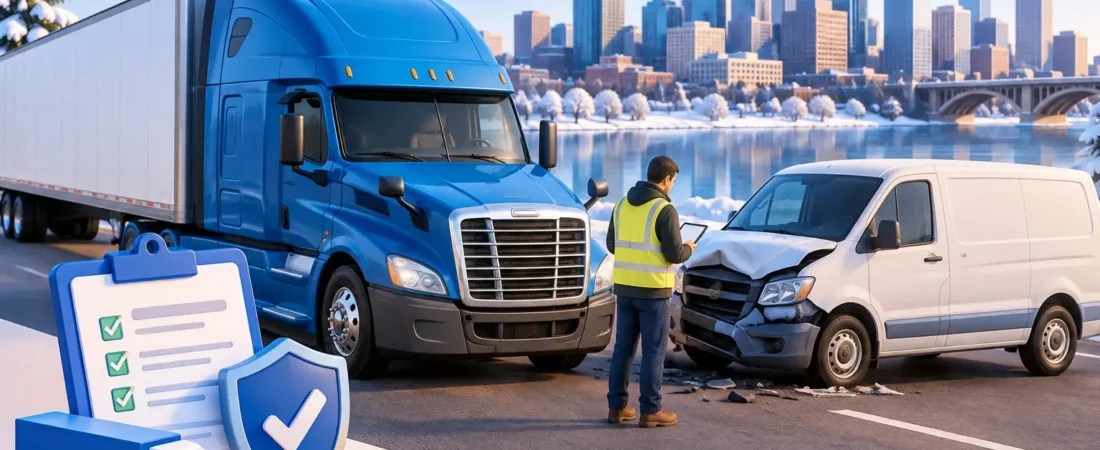
A crash involving a delivery van, work truck, city bus, or company-owned car can leave you facing more than painful injuries. There may be several insurance companies, a corporate employer, and evidence that disappears quickly. These commercial vehicle claim examples show how Minnesota injury cases can unfold and why fast action matters after a serious collision.
A commercial vehicle claim is not automatically worth more than a regular car accident claim. It can, however, be more complicated. The driver may be working for an employer, the vehicle may be leased, and the business may have policies or records that help prove what happened. You do not have to sort through that alone while trying to recover.
Common Commercial Vehicle Claim Examples
A delivery driver rear-ends a stopped vehicle
A driver is stopped at a red light in Minneapolis when a package delivery van hits the back of their vehicle. The impact causes neck and back injuries, followed by weeks of physical therapy and missed work.
In this example, the injured driver would generally turn first to their own Minnesota no-fault coverage, also called Personal Injury Protection or PIP. PIP can help pay medical expenses and a portion of lost wages, regardless of who caused the crash. If the injuries meet Minnesota’s legal threshold for a liability claim, the injured person may also seek compensation from the delivery driver, the driver’s employer, or both.
The key questions may include whether the driver was on the job, whether the company owned or controlled the van, and whether distracted driving or unreasonable delivery expectations played a role. Phone records, onboard vehicle data, delivery logs, dash camera footage, and witness statements can all matter.
A semi-truck changes lanes into a passenger car
A motorist is traveling on I-94 when a tractor-trailer moves into their lane without enough clearance. The car is forced into the median, and the driver suffers broken bones and a concussion.
Truck collision claims often require a close look at evidence beyond the police report. The trucking company may have electronic logging data, inspection records, maintenance files, GPS information, dispatch communications, and event data from the truck. That evidence can help show fatigue, speeding, unsafe lane changes, poor maintenance, or pressure to meet an unrealistic schedule.
Responsibility may extend beyond the person behind the wheel. Depending on the facts, the trucking company, a vehicle owner, a maintenance provider, a cargo company, or another business may share fault. Each case is different, and identifying every responsible party can be critical when injuries are severe.
A construction company truck runs a stop sign
A contractor’s pickup truck is hauling equipment between job sites in St. Paul. The driver runs a stop sign and strikes a motorcyclist. The motorcyclist needs surgery, cannot return to work for several months, and faces lasting pain.
The driver may argue that the motorcycle was speeding. The construction company may contend that the driver was an independent contractor rather than an employee. Those arguments do not end the case. An attorney can investigate who hired the driver, who controlled the work, who owned the truck, what insurance applied, and whether the driver was acting within the scope of work at the time of the collision.
Minnesota follows comparative fault rules. If an injured person is found partly responsible, it may reduce their recovery. Insurers often use this issue to push for a lower settlement. A careful investigation is the best response to unfair blame.
A rideshare passenger is hurt by another driver
A passenger is riding in an Uber or Lyft when another vehicle runs a red light and causes a T-bone crash. The passenger suffers a shoulder injury and loses time from work.
The passenger may have access to PIP benefits through their own auto policy, a household policy, or coverage connected to the vehicle involved. Liability coverage may come from the at-fault driver, the rideshare company’s policy, or more than one insurer. Which coverage applies depends on details such as whether the driver had accepted a ride and was actively transporting a passenger.
This is why quick, accurate insurance reporting matters. Saying the wrong thing to an adjuster or accepting an early offer before the full medical picture is clear can make an already difficult claim harder.
A business vehicle causes a pedestrian injury
A sales representative leaves a client meeting and turns right at an intersection, striking a pedestrian in a crosswalk. The pedestrian suffers a leg fracture and needs rehabilitation.
Pedestrian claims involving company vehicles can raise difficult coverage questions, especially when the driver was using a personal car for work. The driver’s individual policy, the employer’s commercial policy, and uninsured or underinsured motorist coverage may all need to be reviewed. The pedestrian’s own auto insurance may also provide no-fault benefits, even though they were walking when the crash occurred.
The practical lesson is simple: do not assume there is only one source of coverage because there was only one crash.
When Can You Bring a Liability Claim in Minnesota?
Minnesota’s no-fault system provides PIP benefits after many motor vehicle crashes, but PIP does not cover everything. It generally does not pay for pain, emotional distress, full lost income, or the full impact of a permanent injury.
To pursue a claim for pain and suffering against an at-fault driver or business, you generally must meet a statutory threshold. This can involve medical expenses over $4,000, disability lasting 60 days or more, permanent injury, permanent disfigurement, or death. The facts and medical documentation matter. Do not let an insurer tell you that a claim has no value before your treatment and prognosis are understood.
Commercial insurers may move quickly after a crash. Their goal is often to limit what the company pays, not to make sure you receive every benefit available. They may ask for a recorded statement, request broad medical authorizations, or offer a check before you know whether your injury will require future care.
Evidence Can Decide a Commercial Vehicle Case
The most useful evidence is often controlled by the business, not the injured person. A trucking company or delivery service may have video, driver logs, inspection reports, route information, employment records, and electronic vehicle data. Some of that information may be overwritten or discarded in the ordinary course of business.
That is one reason it helps to speak with a lawyer early. Your attorney can take over communications with insurers, seek to preserve evidence, gather medical records, and investigate the crash before the other side controls the narrative. You can focus on healing instead of managing calls, forms, and pressure from adjusters.
Photos of the scene, vehicle damage, visible injuries, and road conditions can also help. So can the names of witnesses, the police report number, medical bills, work absence records, and any communication you receive from an insurer. If you have already given a statement or signed paperwork, you can still get legal advice about your options.
What Compensation May Be Available?
The compensation available in commercial vehicle claims depends on the injury, insurance coverage, fault, and whether Minnesota’s threshold is met. A successful claim may include medical expenses not covered by PIP, wage loss, reduced future earning capacity, pain and suffering, disability, scarring, and other losses tied to the crash.
There is no honest one-size-fits-all value for a commercial vehicle accident. A case involving a few weeks of treatment is different from one involving surgery, permanent limitations, or a career-ending injury. The strength of the evidence and the available insurance coverage also make a real difference.
At Best Injury Lawyer Minnesota, we handle the insurance companies and the paperwork so you can focus on healing. There are no upfront attorney fees, and you can get a clear explanation of your options before deciding what to do next.
If a commercial driver or work vehicle hurt you or someone you love, preserve what you can, get appropriate medical care, and ask for help before an insurer rushes you into a decision. You do not have to face the claim alone.