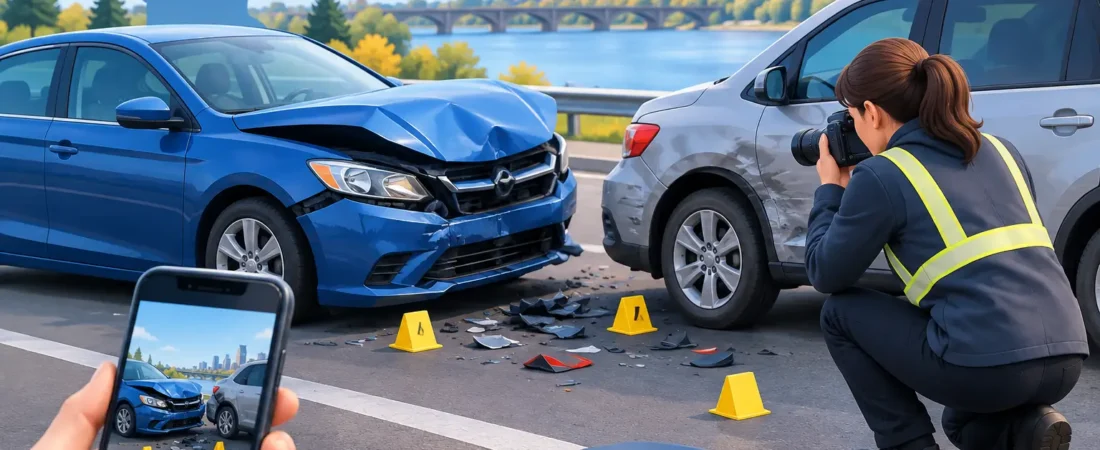
A crash scene can disappear before the tow truck leaves. Skid marks fade, damaged vehicles are repaired, nearby video is recorded over, and witnesses move on with their day. Knowing how to preserve accident evidence gives you a stronger foundation for an insurance claim and, when necessary, a lawsuit. It also gives your attorney the information needed to push back when an insurer tries to minimize what happened.
Your first priority is always safety and medical care. Once you are safe, the goal is simple: document what exists now, protect the items that may later explain the crash, and avoid giving the insurance company material it can use against you.
What counts as accident evidence?
Evidence is more than photographs of vehicle damage. In a Minnesota car, motorcycle, pedestrian, or rideshare accident claim, the useful details often come from several sources. Together, they can show how the collision happened, who was at fault, and how the injuries changed your daily life.
Key evidence may include the police report, scene photos and video, vehicle damage, torn clothing, a damaged helmet, witness contact information, medical records, work-loss documentation, and communications with insurers. Traffic-camera footage, business security video, 911 recordings, vehicle event data recorders, and cell phone records can also matter in the right case.
Do not assume the police report settles every question. Officers work under pressure and may not see every angle. A report can be valuable, but photos, witnesses, physical damage, and video may tell an important part of the story that the report does not capture.
How to preserve accident evidence at the scene
If you can do so without putting yourself or anyone else in danger, use your phone before vehicles are moved. Take wide shots showing the intersection, lanes, traffic lights, signs, weather, and road conditions. Then take closer photos of vehicle positions, impact points, debris, skid marks, broken glass, and visible injuries.
Video can be especially helpful because it captures the scene in context. Slowly walk around the area and narrate basic facts if you are able, such as the location, time, direction each vehicle was traveling, and any road hazard you see. Do not guess about speed, fault, or what another driver was doing. Stick to what is visible.
Exchange information with the other driver and get names and phone numbers for witnesses. A witness who says, “I saw the whole thing,” may be difficult to locate later if you only have a first name. Ask whether they are willing to provide their contact information to the responding officer as well.
If you are seriously hurt, let emergency responders handle the scene. A family member, friend, or attorney can help gather what remains later. Your health comes first.
Protect your phone records
Your phone may contain photos, call logs, location data, and messages that establish timing or show the immediate aftermath of the crash. Do not delete anything related to the collision, even if a message feels unimportant or embarrassing. Save original photos and videos rather than relying only on edited copies or social media posts.
Back up the information to a secure cloud account or send copies to someone you trust. Keep the original files on your phone when possible because file metadata can show when and where a photo or video was created.
Keep the vehicle and damaged property available
An insurer may want a damaged vehicle moved quickly, and that is understandable. But do not authorize repairs, salvage, or disposal until the damage has been thoroughly photographed and, when appropriate, inspected. The pattern of damage can help accident reconstruction professionals determine impact angles, force, and whether the other driver’s version of events makes sense.
This is particularly important after a disputed intersection crash, a motorcycle collision, a pedestrian strike, or a crash involving a commercial vehicle. In those cases, the physical evidence can be more reliable than a driver’s changing story.
The same rule applies to other damaged property. Keep your helmet, jacket, shoes, bicycle, child car seat, and personal items in their post-crash condition. Do not throw away torn clothing or broken glasses. Place smaller items in a box or bag, label them with the date, and store them somewhere safe.
Your vehicle may also have an event data recorder, sometimes called a “black box.” Depending on the vehicle, it may retain information about speed, braking, seat belt use, steering, and other actions shortly before impact. This data can be overwritten or lost during repairs, so prompt action matters.
Move quickly to preserve video and witnesses
Many businesses, apartment buildings, buses, and nearby homes have cameras facing roads, parking lots, or entrances. That footage may be erased automatically within days or weeks. A camera does not have to capture the exact moment of impact to help. It may show a driver running a red light, traveling too fast, using the wrong lane, or leaving the scene.
Write down every possible camera location while the details are fresh. This may include gas stations, restaurants, stores, schools, construction sites, and neighboring buildings. Do not argue with a property owner if they refuse to release video. An attorney can send a preservation request and take additional steps to seek the footage.
Witness memories also fade fast. Make a brief note of what each person said and when you spoke with them. Avoid coaching a witness or asking them to support your side. The most persuasive witness is one who appears independent and consistent.
Document your injuries and recovery
Minnesota’s no-fault system requires your own Personal Injury Protection, or PIP, coverage to pay certain medical expenses and wage-loss benefits regardless of fault. That does not mean the other driver’s conduct is irrelevant. Fault can still matter greatly when your injuries meet Minnesota’s threshold for a liability claim or when you seek compensation beyond available no-fault benefits.
Medical evidence connects the crash to the harm you are experiencing. Seek medical attention promptly if you have pain, dizziness, headaches, numbness, or other symptoms. Some injuries, including concussions and soft-tissue injuries, may not feel severe in the first hours after a collision.
Follow treatment recommendations and be honest with your providers about your symptoms and limitations. Keep copies of discharge instructions, prescriptions, medical bills, mileage to appointments, and notes about missed work. A simple recovery journal can also help. Record pain levels, sleep problems, activities you cannot do, and the ways injuries affect work or family responsibilities.
Do not exaggerate. Accurate, consistent documentation is far more valuable than dramatic language.
Be careful with insurers and social media
You should report a crash to your insurer, but you do not have to give a recorded statement to the other driver’s insurance company before you understand your rights. Adjusters are trained to gather information that limits what their company pays. A casual question about whether you are “feeling okay” can later be used to argue that your injuries were minor.
Do not sign broad medical authorizations, accept a quick settlement, or agree to release a totaled vehicle before you understand what evidence may be lost. Early offers often arrive before the full extent of an injury is known.
Social media can create similar problems. Insurers may review public posts and photos for anything that appears inconsistent with your injury claim. You do not need to disappear from the internet, but avoid posting about the crash, your injuries, the claim, or physical activities. Never delete existing posts after a claim begins. Preserve them and ask your attorney how to handle them.
Get legal help before evidence disappears
Some evidence requires fast legal action. Video systems overwrite recordings. Commercial vehicles may generate driver logs and electronic data. Rideshare claims can involve app records, driver status, and multiple insurance policies. An experienced Minnesota injury attorney can identify what should be preserved, notify the right parties, and handle the insurance communications while you focus on healing.
Best Injury Lawyer Minnesota offers free case reviews and works on a contingency fee basis, so you do not pay upfront for help protecting your claim. You do not have to face insurer pressure alone.
If you are recovering from a crash, start with what you have: save the photos, keep the damaged property, write down the names, and get medical care. A few careful steps taken now can protect the truth of what happened when it matters most.