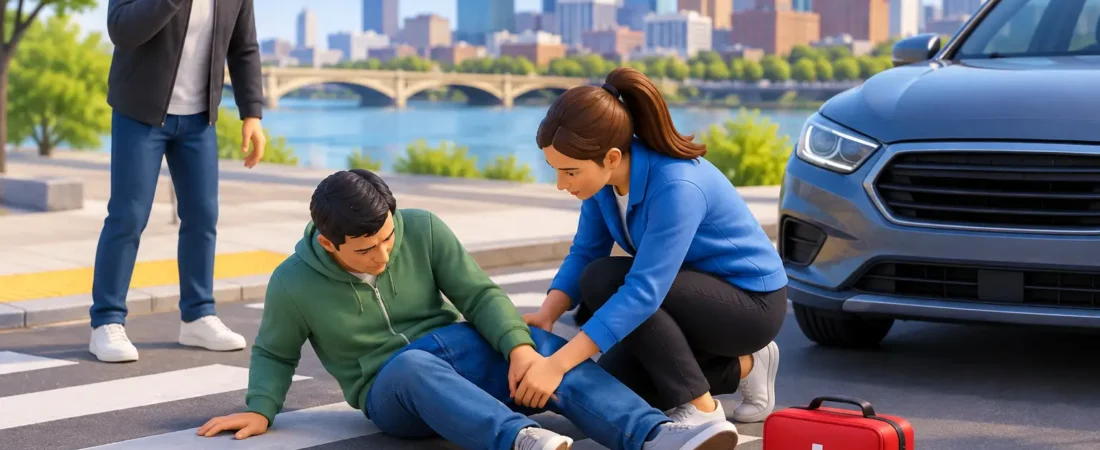
A driver can look down for one second, fail to yield at a crosswalk, or turn without checking for people in the intersection. For the pedestrian, that moment can mean an ambulance ride, surgery, missed work, and a pile of insurance questions. Pedestrian accidents are especially serious because a person on foot has almost no protection from the force of a moving vehicle.
If you were hit while walking in Minnesota, you do not have to sort out the insurance calls, paperwork, and legal deadlines while you are trying to heal. Knowing what to do early can protect both your health and your claim.
What to Do After a Pedestrian Accident
Your first priority is medical care. Some injuries are obvious, such as broken bones, cuts, or head trauma. Others, including concussions, internal injuries, and soft-tissue damage, may not fully appear until hours or days later. Follow your doctor’s instructions, attend follow-up appointments, and tell your providers about every symptom you are experiencing.
If you can safely do so at the scene, call 911 and ask for police and medical assistance. A police report can document the location, involved driver, witnesses, road conditions, and initial account of what happened. Do not assume that a driver’s apology or promise to “take care of it” will be enough once an insurance company becomes involved.
Get the driver’s name, contact information, license plate number, and insurance details if possible. Take photos of the vehicle, the intersection or roadway, traffic signals, crosswalk markings, your injuries, and damaged clothing or personal items. Witness names and phone numbers can be valuable, particularly when the driver disputes who had the right of way.
You should also avoid giving a recorded statement to the driver’s insurer before you understand your rights. Adjusters may sound concerned, but their job is to limit what the insurance company pays. A quick statement made while you are in pain or on medication can later be used to question your injuries or blame you for the crash.
Why Pedestrian Accidents Happen
Many pedestrian injury cases involve preventable driver behavior. A driver may be speeding, distracted by a phone, impaired, or simply not watching carefully enough while turning or backing up. Minnesota pedestrians are often hit in crosswalks, parking lots, residential streets, near schools, and at busy intersections where drivers focus on traffic instead of people crossing the road.
Nighttime crashes can create additional disputes. Insurers may argue that a pedestrian was hard to see, wore dark clothing, or crossed outside a marked crosswalk. Those facts can matter, but they do not automatically excuse a driver who failed to keep a proper lookout, obey traffic signals, or use reasonable care.
Fault is not always as simple as it first appears. Video footage, vehicle data, nearby business cameras, witness accounts, cell phone records, and the physical evidence at the scene may tell a fuller story. The sooner that evidence is identified and preserved, the better.
A Pedestrian Can Still Have a Claim if Blamed
Minnesota uses a comparative fault system. This means an injured pedestrian may still seek compensation even if they are found partly responsible for what happened. Any recovery can be reduced by the pedestrian’s percentage of fault, and the specific facts matter greatly.
Insurance companies often raise blame early because it reduces their financial exposure. That is one reason not to accept an insurer’s version of events without a careful investigation. A pedestrian injury lawyer can evaluate the evidence, challenge unfair assumptions, and present the facts clearly.
How Minnesota No-Fault Benefits May Help
Minnesota’s no-fault system can be confusing after a pedestrian crash because the injured person was not driving. In many cases, Personal Injury Protection, often called PIP or no-fault benefits, may still be available.
The policy that applies can depend on the circumstances. Coverage may come from your own auto insurance policy, a policy held by a family member in your household, or insurance connected to the vehicle involved in the crash. The order of coverage and available benefits can vary, so it is worth having the situation reviewed rather than relying on an insurer’s quick answer.
PIP benefits can help pay reasonable medical expenses, wage loss if you cannot work, replacement services, and certain other losses. These benefits are generally available without first proving the driver caused the crash. That can provide crucial support while liability is being investigated.
However, no-fault benefits are not unlimited. Medical treatment can become expensive quickly, and wage-loss benefits may not replace your full income. In a serious case, you may also have the right to bring a claim against the at-fault driver for damages beyond PIP, including pain and suffering, future medical needs, lost earning capacity, and other losses allowed under Minnesota law.
What Compensation Can Include
Every pedestrian accident case is different. A fair claim should account for more than the first emergency room bill. The real impact may include months of physical therapy, time away from work, chronic pain, mobility limitations, and the emotional toll of being afraid to walk near traffic again.
Depending on the facts, compensation may address medical bills, future treatment, lost income, reduced ability to earn a living, pain and suffering, scarring, and damage to personal property. If a pedestrian is killed, surviving family members may have additional legal options.
The value of a case depends on the severity of injuries, available insurance coverage, the strength of the evidence, fault issues, and how the injury affects daily life. Be cautious about early settlement offers. An offer may arrive before you know whether you will need surgery, extended therapy, or time away from your job. Once a settlement is accepted, you generally cannot return later for more money if your condition worsens.
How a Minnesota Pedestrian Injury Lawyer Can Help
After a crash, you should be able to focus on appointments, rest, and recovery. A lawyer can take over the parts of the process that create pressure and uncertainty. That includes handling insurer communications, reviewing coverage, gathering evidence, calculating losses, and preparing the claim for negotiation or trial if necessary.
A strong case often requires more than submitting medical bills. It may involve obtaining crash reports, speaking with witnesses, preserving video, working with medical providers, documenting lost wages, and showing how the injury has changed your life. Insurers take claims more seriously when they see that the injured person has counsel prepared to pursue the case fully.
At Best Injury Lawyer Minnesota, injured pedestrians can receive a free case review and direct guidance on their options. There is no upfront fee, and the firm is paid only if it recovers compensation for you. You do not have to face the insurance companies and their paperwork alone.
Do Not Wait Too Long to Get Answers
Minnesota law sets deadlines for injury claims, and insurance policies can have notice requirements. Evidence can also disappear quickly. A nearby camera may overwrite footage, witnesses may become harder to locate, and the details of a traumatic event can fade.
Calling a lawyer promptly does not mean you are committing to a lawsuit. It means you are giving yourself the chance to understand your coverage, protect key evidence, and make informed decisions before an insurer pushes you toward a low settlement. After a pedestrian crash, getting support early can give you room to heal while someone protects your right to move forward.