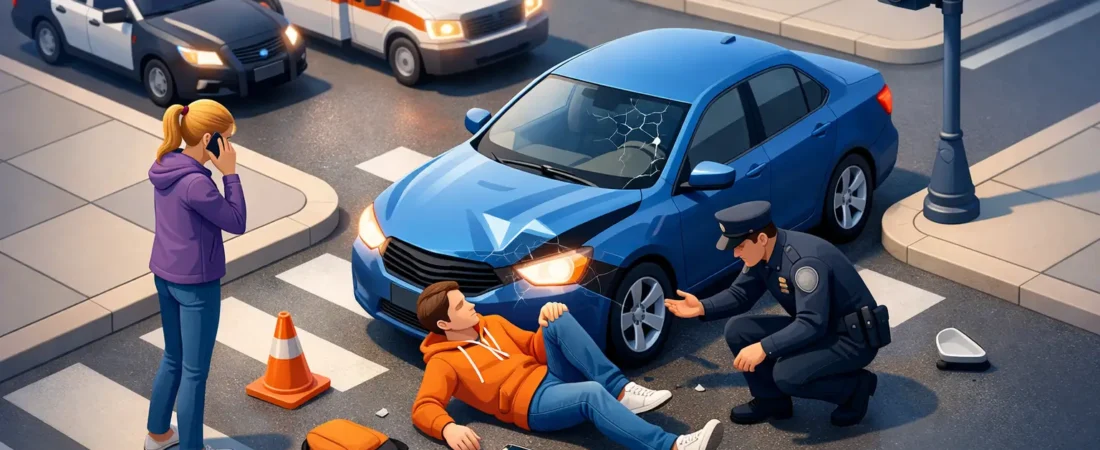
One crosswalk, one turn, one distracted driver – and your life can change in seconds. If you are dealing with medical bills, missed work, and calls from insurance adjusters, pedestrian hit by car compensation is not just a legal phrase. It is the financial support that can help you recover and move forward.
In Minnesota, pedestrian injury claims can be more complicated than people expect. Many injured pedestrians assume the driver’s insurance automatically pays everything. Sometimes it does not. Minnesota’s no-fault system, questions about who was at fault, and the seriousness of your injuries all affect what compensation may be available.
How pedestrian hit by car compensation works
If a driver hits you while you are walking, your case usually involves two parts. The first is no-fault insurance benefits, often called Personal Injury Protection or PIP. The second is a claim against the at-fault driver if your injuries are serious enough to meet Minnesota’s legal threshold.
No-fault benefits can apply even if you were a pedestrian. In many cases, your own auto policy may provide PIP coverage. If you do not have your own policy, coverage may come from a policy in your household or from the vehicle involved, depending on the facts. This matters because PIP can help pay medical expenses and wage loss right away, without waiting for a fault decision.
That said, PIP is limited. It does not fully cover pain and suffering. It may not cover all of your lost income. And when injuries are severe, the real financial impact often goes far beyond those initial benefits.
What compensation may be available after a pedestrian accident
Pedestrian hit by car compensation can include both economic losses and human losses. Economic losses are the costs you can usually measure with records and bills. Human losses are the ways the injury changes your daily life.
Medical expenses are often the first concern. Emergency care, hospital stays, surgery, follow-up visits, physical therapy, imaging, medications, and future treatment can all be part of a claim. With a serious pedestrian injury, future care is often just as important as the bills already received.
Lost wages are another major part of compensation. If you miss work while recovering, that lost income may be recoverable. If your injuries affect your ability to return to the same job or work the same hours, the claim may also include lost earning capacity.
Then there is pain and suffering. This covers physical pain, emotional distress, limitations on daily activities, and the overall disruption to your life. A broken leg that keeps you off your feet for months affects more than your paycheck. So does a head injury that causes headaches, memory problems, or anxiety around traffic.
In some cases, compensation may also include scarring, permanent disability, and loss of enjoyment of life. Every case is different. A claim involving temporary bruising will not be valued the same way as one involving surgery, permanent mobility problems, or a traumatic brain injury.
Minnesota no-fault rules matter more than most people realize
Minnesota law can change the path of a pedestrian case from the start. Because this is a no-fault state, the first question is often not who caused the crash. It is which insurance policy should pay PIP benefits and whether those benefits are enough.
To bring a claim for pain and suffering against the driver, you generally need to meet Minnesota’s injury threshold. That can happen in different ways, including significant disfigurement, permanent injury, death, disability for 60 days or more, or medical expenses over a certain amount. The details matter, and insurers often fight hard over whether the threshold has been met.
This is one reason quick settlements can be risky. Early on, you may not know how long treatment will last, whether you will need future care, or whether symptoms will become chronic. Once you settle, you usually cannot go back and ask for more.
Who pays when a pedestrian is hit by a car?
The answer depends on the coverage available and the extent of your injuries. Your own no-fault coverage may pay first for certain losses. After that, the at-fault driver’s bodily injury liability coverage may be responsible for damages that go beyond no-fault benefits.
If the driver was uninsured or underinsured, your own uninsured or underinsured motorist coverage may become important. This surprises many people. Even though you were walking, your auto insurance can still play a major role in the case.
There are also situations where more than one party may share responsibility. A commercial driver, employer, rideshare company, property owner, or even a government entity could be involved depending on where and how the crash happened. A poorly marked crosswalk, blocked sightline, or work vehicle collision can raise issues beyond a standard driver negligence claim.
What can reduce pedestrian hit by car compensation?
Insurance companies look for ways to limit payouts. One common tactic is arguing that the pedestrian was partly at fault. Maybe they claim you crossed outside a crosswalk, entered traffic suddenly, wore dark clothing, or were distracted.
Minnesota follows a comparative fault rule. That means compensation can be reduced if you are found partly responsible. If an insurer can shift enough blame onto you, it can reduce the claim value significantly. But these arguments are often overstated. Drivers still have a duty to watch for pedestrians, especially in intersections, parking lots, school zones, and residential areas.
Delays in medical treatment can also hurt a case. If there is a long gap between the crash and your first doctor visit, the insurer may argue your injuries were minor or unrelated. The same goes for inconsistent treatment. That does not mean every gap is fatal to a claim. Real life happens. But it does mean documentation matters.
Social media can create problems too. A single photo or post taken out of context may be used to suggest you are less injured than you say. After a pedestrian accident, it is smart to be careful about what you share.
What strengthens a pedestrian injury claim
Strong cases are built on evidence, not just statements. The police report is often a starting point, but it is rarely the whole story. Video footage, witness statements, photos of the scene, vehicle damage, skid marks, medical records, and employer wage records can all help prove the full impact of the crash.
In pedestrian cases, timing matters. Surveillance footage may be deleted quickly. Witnesses become harder to find. Physical evidence disappears. The sooner your legal team starts gathering proof, the better your position usually is.
Medical evidence is especially important. It should connect the crash to your injuries and show how those injuries affect your daily life. In more serious cases, expert opinions may be needed to explain future treatment needs, permanent limitations, or reduced earning capacity.
A lawyer also helps control communication with insurers. Adjusters are trained to ask questions that seem harmless but can later be used against you. When an attorney handles those conversations, it reduces pressure on you and lowers the chance of saying something that weakens your claim.
When to talk to a lawyer about pedestrian hit by car compensation
If you were taken to the hospital, missed work, suffered a fracture, head injury, back injury, or any lasting symptoms, it is smart to speak with a lawyer early. The same is true if the insurer is disputing fault, delaying payment, or pushing you to settle fast.
A good attorney does more than file paperwork. They identify all available insurance coverage, gather evidence, calculate current and future losses, and prepare the case as if it may need to go to trial. That trial-ready approach often matters long before a courtroom is involved because insurers take well-prepared claims more seriously.
At Best Injury Lawyer Minnesota, the focus is simple: protect injured people, deal with the insurance companies, and pursue the full compensation the law allows. You do not have to figure out Minnesota no-fault rules on your own while trying to recover.
After a pedestrian crash, the right next step is not guessing what your case might be worth or trusting the first offer that comes in. It is getting clear advice, protecting the evidence, and giving yourself the best chance at a recovery that reflects what this injury has really cost you.